What is Fraxel?
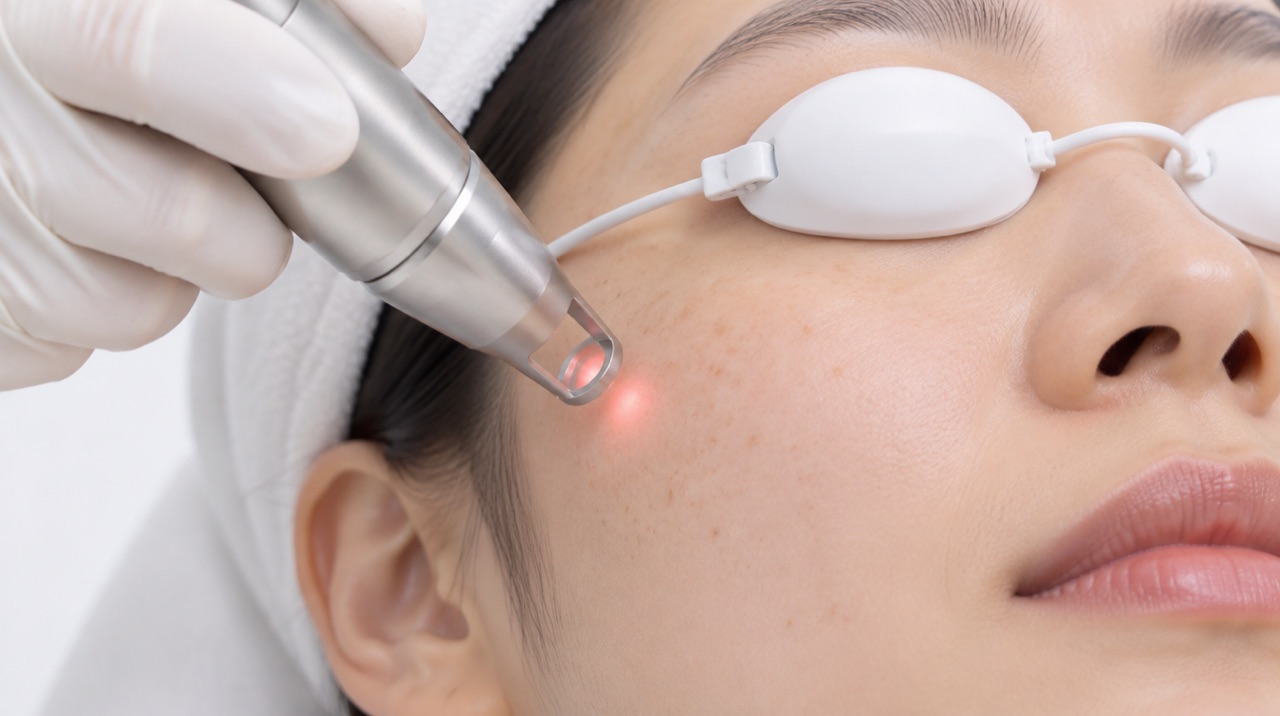
Fraxel is a brand of fractional laser made by Solta Medical. Instead of treating the whole surface, it delivers energy in a grid of tiny columns. Each column triggers the skin to repair itself and lay down new collagen, while the untouched skin around it speeds up healing. The best-known model, Fraxel Dual, has two wavelengths: 1550 nm for deeper remodelling of scars and lines, and 1927 nm for surface pigment and tone. Both are non-ablative, meaning the surface layer is left in place.
In Korea the word “Fraxel” is also used loosely for fractional lasers in general. A menu item called Fraxel may be the genuine Fraxel device or another fractional laser, so ask which machine the clinic uses.
Fraxel and other fractional options on Seoul menus
| Treatment | How it works | Typical downtime |
|---|---|---|
| Fraxel (non-ablative fractional) | Columns of heat, surface intact | About 5 to 7 days |
| Fractional CO2 or erbium (ablative) | Columns that vaporise tissue | About 7 to 10 days or more |
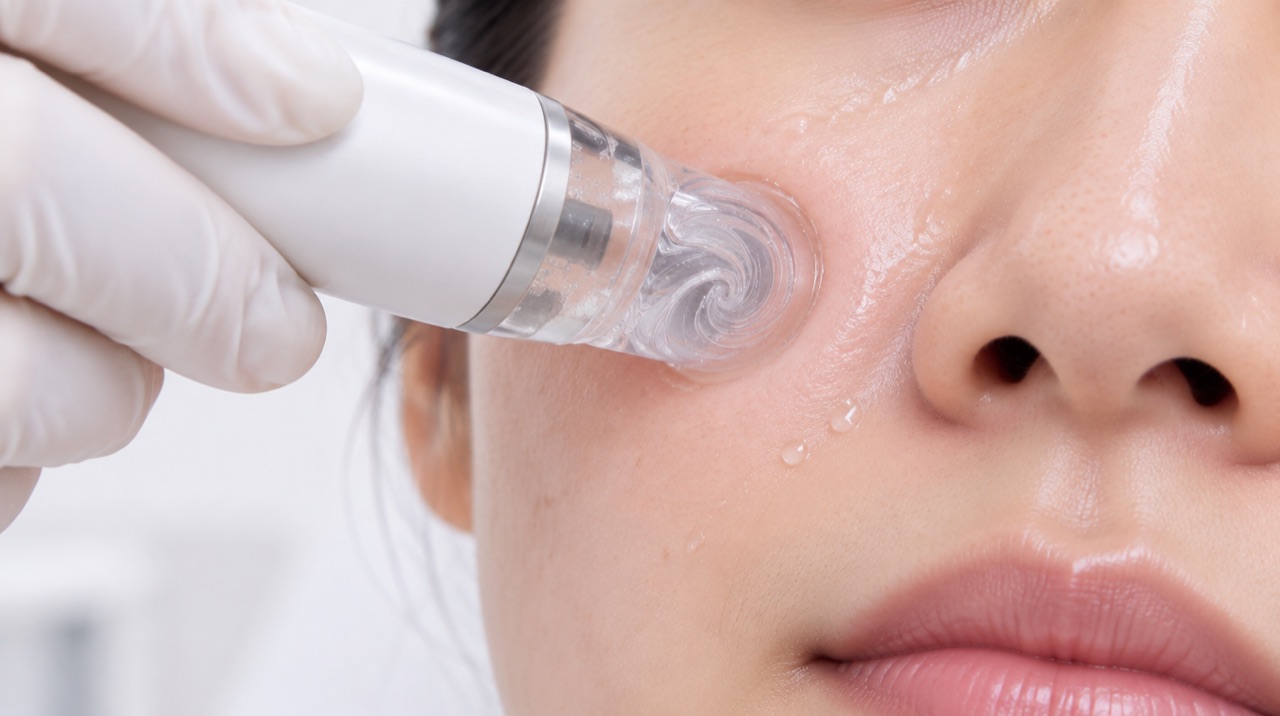
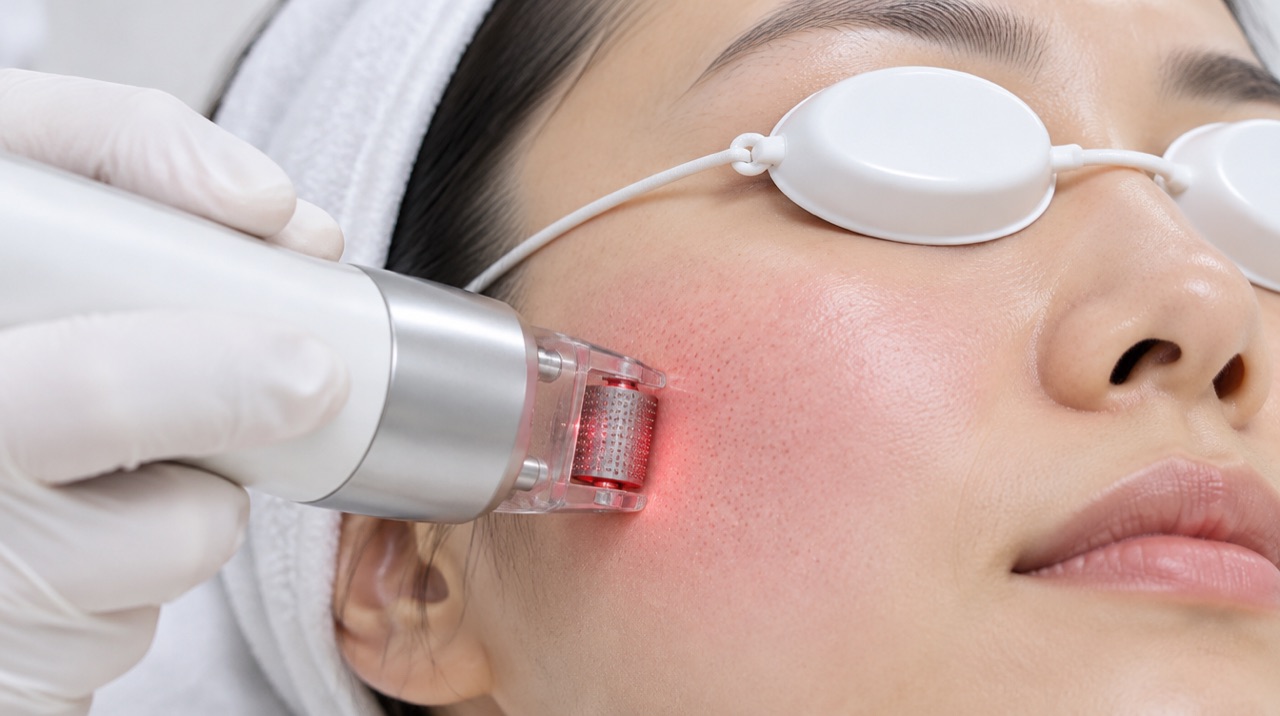
| RF microneedling | Needles deliver radiofrequency heat below the surface | About 1 to 3 days |
| Fractional pico laser | Picosecond pulses through a fractional lens | About 1 to 3 days |
Stronger treatments generally do more per session but need longer recovery and carry more risk, especially for darker skin. Clinics often combine methods, for example RF microneedling with a collagen booster such as Juvelook.
What does Fraxel treat?
The main reasons visitors ask for Fraxel in Korea are acne scars, enlarged pores and uneven texture and fine lines. The 1927 nm setting is also used for sun damage and dullness. It works best on shallow, rolling scars and general roughness. Deep ice-pick scars and scars tethered to deeper tissue usually need other techniques, such as subcision or targeted chemical treatment, alongside laser.
Active acne should be brought under control first; see acne and breakouts.
What happens on the day
- Cleansing and consultation, including photographs of your scars under angled light.
- Numbing cream for 40 to 60 minutes, which is essential for this treatment.
- The handpiece is rolled or stamped across the skin in several passes while cold air is blown on the area. It feels hot and prickly.
- Cooling, soothing care and a regenerating cream. Your face will feel sunburnt for a few hours.
Fraxel downtime, day by day
| When | What to expect |
|---|---|
| Day 0 to 1 | Redness, heat and swelling, like a sunburn |
| Day 2 to 3 | Skin turns darker and rough, with a sandpaper feel |
| Day 3 to 6 | Flaking and peeling; do not pick |
| Day 7 onward | Fresh pink skin that is sensitive to the sun |
These are typical ranges and vary with settings and skin type. For a trip, this means scheduling Fraxel on your first day or two, planning mostly indoor activities afterwards, and accepting that you will look treated in photos for several days.
Aftercare
Keep the skin moisturised with the products the clinic provides, cleanse gently and avoid makeup until the clinic says it is fine. Strict sun avoidance for several weeks is the most important step for preventing dark marks: use sunscreen, a hat and shade. Avoid saunas, swimming pools, exercise that causes heavy sweating, exfoliants and retinoids until the skin has healed.
How many sessions, and realistic results
Scar treatment is gradual. Clinics typically recommend three to five sessions about four weeks apart, and improvement continues for months as collagen remodels. Scars soften and become shallower; they rarely disappear completely. One session on a single trip is a beginning, so ask what improvement is realistic from one treatment and how to continue.
Risks and who should avoid it
The most important risk, particularly for Asian and darker skin tones, is post-inflammatory hyperpigmentation: dark patches that can take months to fade. Other risks include prolonged redness, acne flare, cold sore reactivation, infection and, rarely, scarring. Tell the doctor if you get cold sores, have used isotretinoin in recent months, tend to form keloids, have a tan, or are pregnant.
Booking Fraxel in Seoul as a visitor
Most Seoul skin clinics that treat international patients take Fraxel bookings through an English web form or by WhatsApp, KakaoTalk or LINE. Send your concerns, a few clear photos and your travel dates, ask for a written quote that names the exact product or device and the amount, and bring your passport on the day. Leave a few days between treatment and your flight where you can, so the clinic can check you if anything needs attention.
Not sure whether Fraxel is the right choice? Answer 12 quick questions for a personalised plan, compare skin clinics in Seoul, or read the complete guide to skin treatment in Korea.
Fraxel in Korea: frequently asked questions
How long is Fraxel downtime?
Plan for about five to seven days of visible redness, swelling, darkening and flaking, followed by pink, sun-sensitive skin. Exact recovery depends on the settings used.
How many Fraxel sessions for acne scars?
Clinics typically recommend three to five sessions about four weeks apart. Scars improve gradually and usually soften rather than vanish.
Is Fraxel painful?
It feels hot and prickly even with numbing cream, and the skin feels sunburnt for a few hours afterwards. Cold air during treatment helps.
Can I go sightseeing after Fraxel?
You can go out, but your skin will look red and then flaky for several days and must be protected from the sun. Many visitors plan indoor activities for the first few days.
Is Fraxel safe for Asian skin?
It is widely used in Korea, with settings adjusted to reduce the risk of dark marks. Sun avoidance and following aftercare instructions are essential.
This guide is general information for travellers, not medical advice. Product details and clinic practices change, and suitability, dose and settings are decided by a licensed doctor after examining your skin.