What is Rejuran?
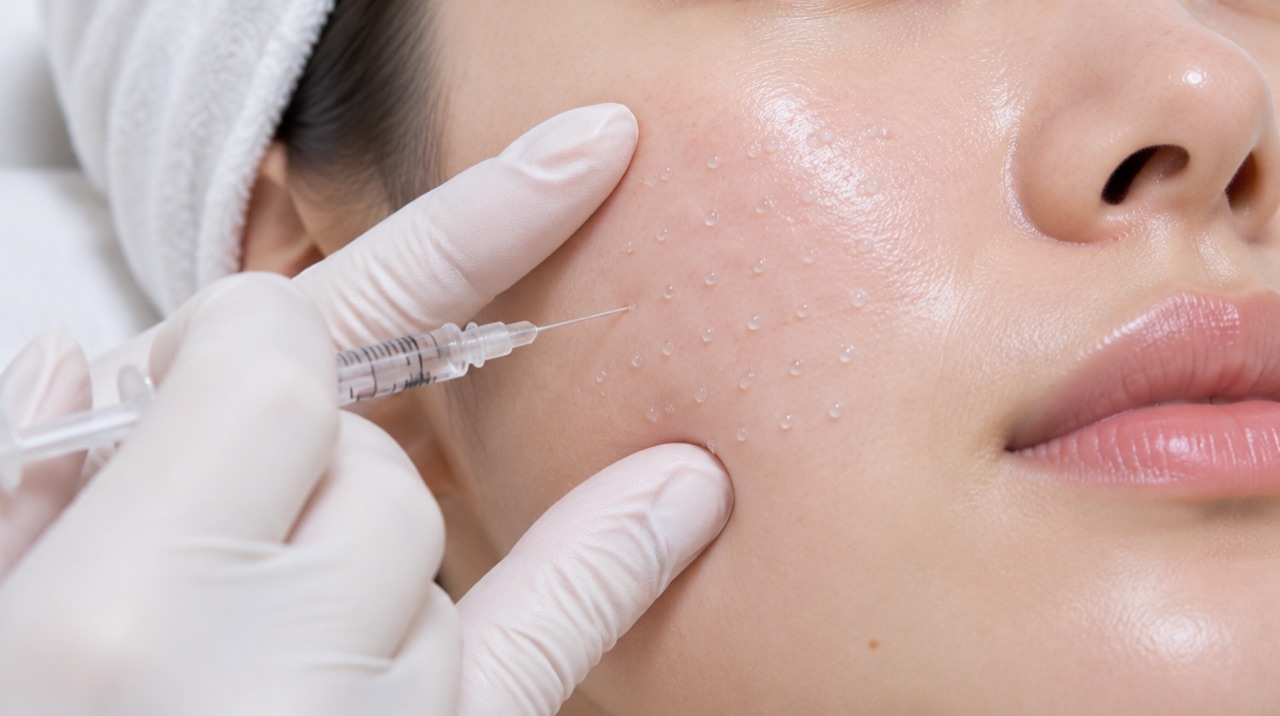
Rejuran is the brand name of a range of injectables made by the Korean company PharmaResearch. The active ingredient in all of them is polynucleotide, usually shortened to PN: chains of DNA fragments extracted from salmon and purified to remove the proteins that could cause a reaction. PN is placed in or under the skin in very small amounts, where it is intended to support the skin’s own repair processes and improve its quality over several weeks.
Rejuran is not a filler. It does not add volume or change the shape of the face. It is known in Korea as the “salmon injection” and is one of the treatments visitors most often travel to Seoul for, partly because the injectable range is not available in many other countries.
The four Rejuran types at a glance
| Type | Box | What is different | Where it is injected | Best for |
|---|---|---|---|---|
| Rejuran Healer | Black | The original PN formula | Dermis of the whole face, often the neck | Overall texture, elasticity, fine lines, pores |
| Rejuran HB (HB Plus) | Burgundy | PN with hyaluronic acid and a local anaesthetic | Dermis of the whole face | Dry or dehydrated skin, first-timers, low pain tolerance |
| Rejuran i | White and silver | Thinner, lighter formula | Thin skin around and under the eyes | Under-eye fine lines, crepey eyelid skin |
| Rejuran S | Blue | Thicker, denser formula | Directly beneath individual scars | Indented acne scars |
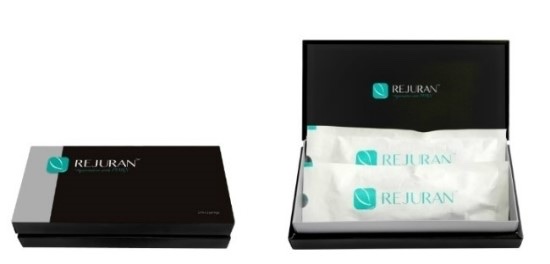
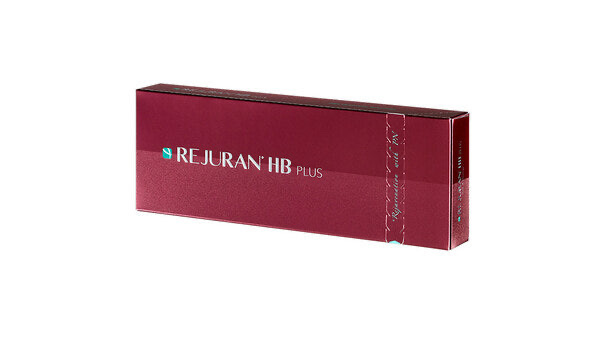
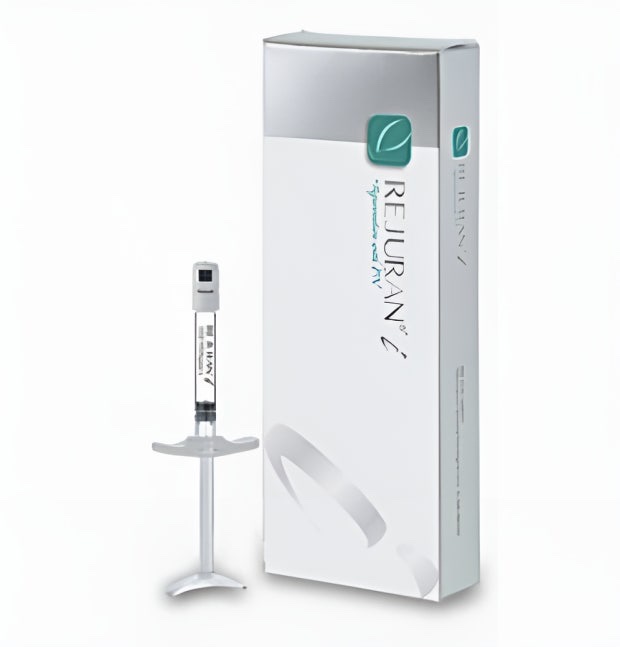
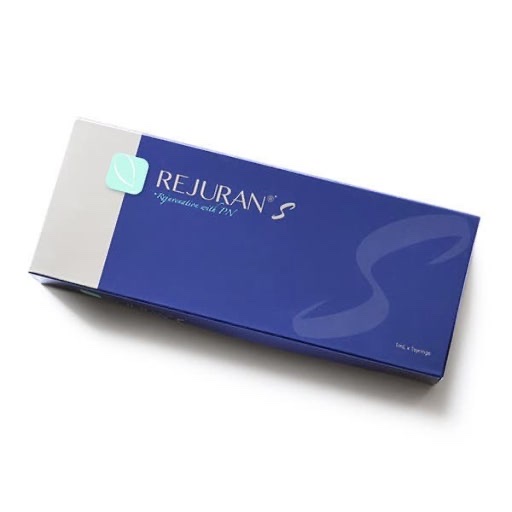
Knowing the box colours is useful in the clinic: you can ask to see the product before it is opened and check that it matches what you were quoted.
Rejuran Healer: the original, for the whole face
Healer is the product most people mean when they say Rejuran. It is injected across the full face in a grid of tiny deposits, each a few millimetres apart, and is chosen for general skin quality: rough or thin skin, early fine lines, enlarged pores, a tired look and skin recovering from past acne. It is the most widely offered type in Seoul and the one with the longest track record.
Its drawback is comfort. Healer contains no anaesthetic and has a reputation for stinging, so numbing cream is essential, and it leaves visible raised bumps for one to three days. Read the full Rejuran Healer guide for the session, downtime photos and results.
Rejuran HB: the less painful, more hydrating option
Rejuran HB, sold as HB Plus, combines PN with hyaluronic acid and lidocaine, a local anaesthetic, in the same syringe. The anaesthetic makes the injections noticeably more comfortable than Healer, and the hyaluronic acid adds immediate hydration and a quicker glow.
It is injected in the same way as Healer, across the whole face. Clinics tend to recommend it for dry or dehydrated skin, for people having Rejuran for the first time, for anyone who found Healer too painful, and for visitors who want a more visible short-term result. The trade-off is that part of each syringe is hyaluronic acid rather than PN, so people whose main goal is repair and texture are often still steered towards Healer. Seoul menus usually quote HB by the cc, commonly 1 to 3 cc.
Rejuran i: for the eye area
The skin around the eyes is the thinnest on the face, and a product designed for the cheeks can sit unevenly there. Rejuran i is a lighter, thinner version made for this area. It is placed very superficially under the eyes and sometimes on the upper eyelids and at the outer corners, usually with a very fine needle.
It is used for under-eye fine lines, crepey texture and thin, tired-looking skin. It does not fill hollows or remove eye bags, and dark circles caused by pigment or visible blood vessels respond less predictably. Expect small bumps under the eyes for a few days, which can take a little longer to settle than on the cheeks. Clinics often add Rejuran i to a full-face Healer or HB session.
Rejuran S: for acne scars
Rejuran S is the thickest product in the range. Instead of being spread across the face, it is injected precisely beneath each indented scar, where it is intended to support the depressed area and encourage the skin to rebuild from below. Doctors often release the tethered base of the scar first, a technique called subcision, and then place Rejuran S into the space created.
It is used for rolling and boxcar acne scars and is usually part of a combined scar programme with fractional laser or RF microneedling, repeated over several sessions. It is a targeted treatment and is not used as a general full-face booster.
Which Rejuran is best for you?
| If your main goal is | Clinics usually suggest |
|---|---|
| Better overall texture, elasticity and fine lines | Rejuran Healer |
| Hydration and glow, or dry and dehydrated skin | Rejuran HB |
| Your first Rejuran, or you are nervous about pain | Rejuran HB |
| Fine lines and crepey skin under the eyes | Rejuran i, often with Healer or HB on the rest of the face |
| Indented acne scars | Rejuran S, usually with laser or RF microneedling |
| A short trip with limited recovery time | Rejuran HB, or Healer early in the stay |
These are common patterns, not rules. The right choice depends on your skin when the doctor examines it, and many plans use two types in one visit, for example Healer on the face and Rejuran i under the eyes.
How Rejuran is injected, and how it feels
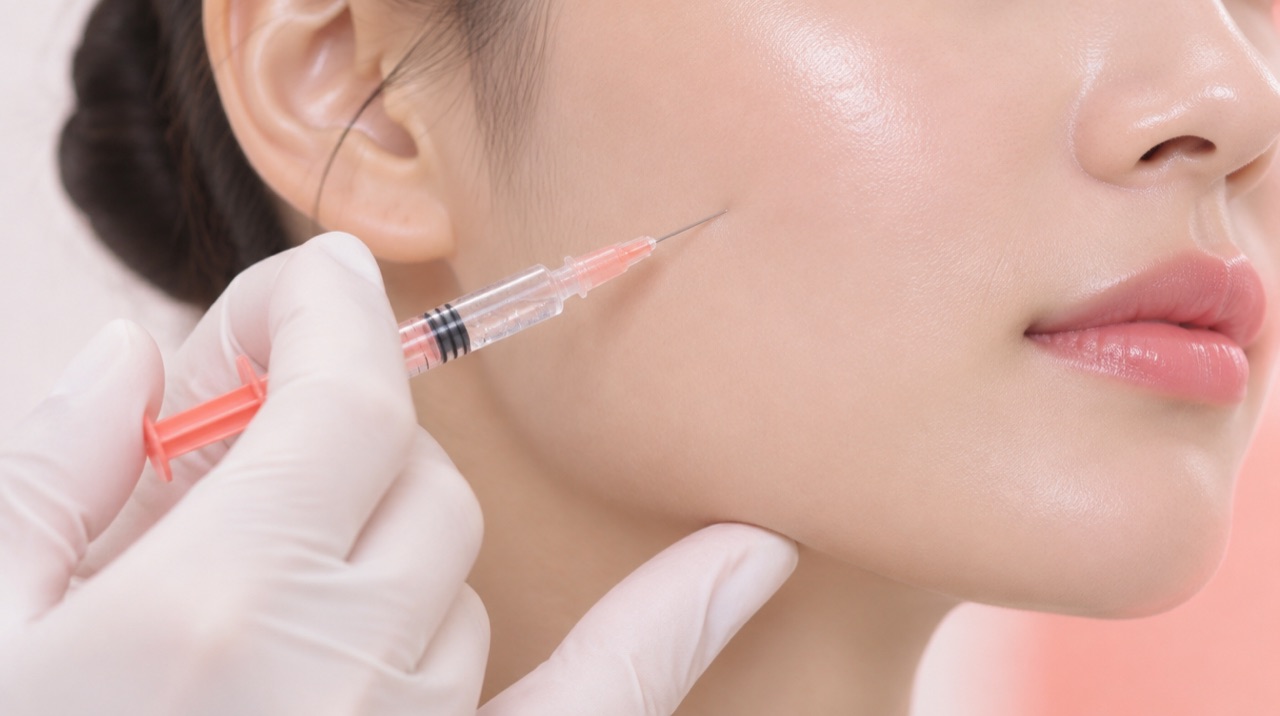
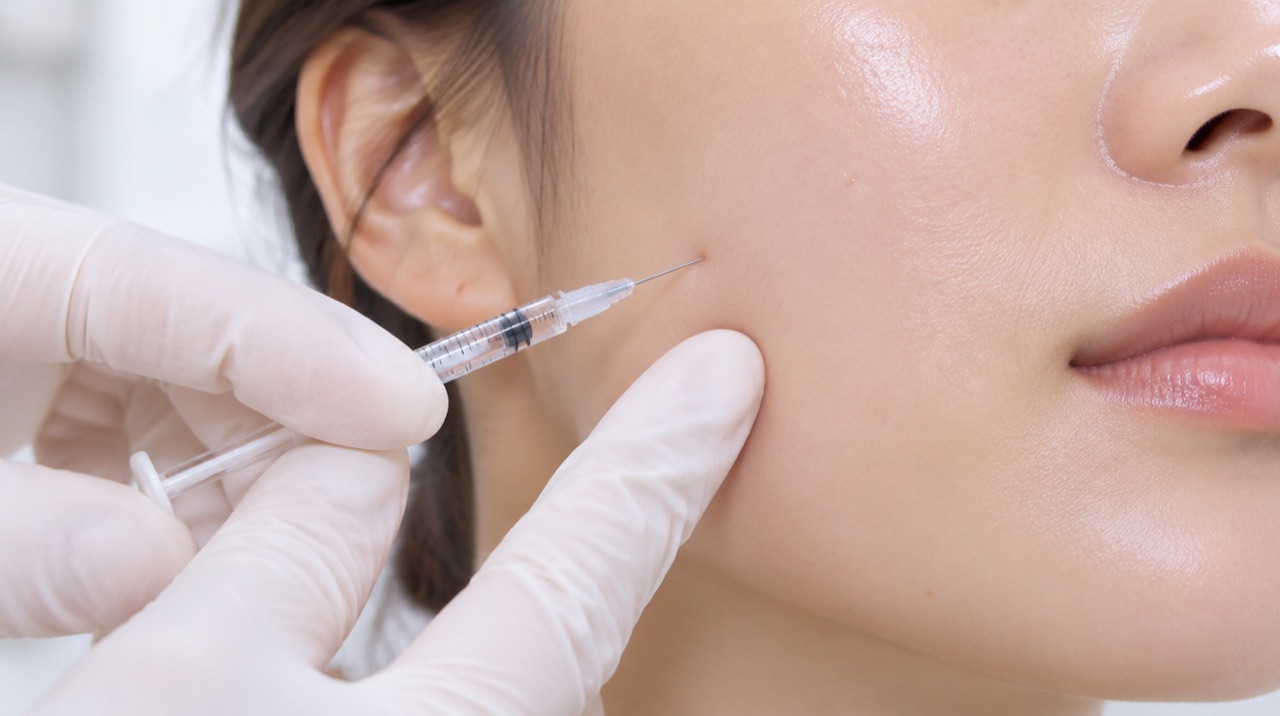
Full-face types are injected either by hand, which lets the doctor vary depth and amount by area, or with a multi-needle injector device, which is faster and more uniform. Rejuran i and Rejuran S are placed by hand because they need precision. Numbing cream is applied for 20 to 40 minutes beforehand. Healer is generally the most uncomfortable, HB the least, and the eye area is sensitive whichever product is used.
All types leave small bumps, redness and pinpoint marks that settle over one to three days, with occasional bruising. Most clinics recommend a course of three or four sessions two to four weeks apart, then maintenance every six to twelve months. Results build gradually over one to two months.
Safety and checking the product is genuine
Tell the doctor if you have a fish or seafood allergy, an autoimmune condition, active acne or infection in the area, a tendency to keloid scars, or if you are pregnant or breastfeeding. Side effects are usually limited to bumps, redness, swelling and bruising; prolonged lumps, infection and allergic reactions are uncommon.
Ask the clinic to show you the sealed box and open it in front of you, confirm the type and the number of cc on your quote, and check who will inject it. A clinic that treats with Rejuran regularly will do this without hesitation.
Booking Rejuran in Seoul as a visitor
Most Seoul skin clinics that treat international patients take Rejuran bookings through an English web form or by WhatsApp, KakaoTalk or LINE. Send your concerns, a few clear photos and your travel dates, ask for a written quote that names the exact product or device and the amount, and bring your passport on the day. Leave a few days between treatment and your flight where you can, so the clinic can check you if anything needs attention.
Not sure whether Rejuran is the right choice? Answer 12 quick questions for a personalised plan, compare skin clinics in Seoul, or read the complete guide to skin treatment in Korea.
Rejuran in Korea: frequently asked questions
What is the difference between Rejuran Healer and Rejuran HB?
Rejuran Healer is the original PN-only formula, chosen for overall skin repair, texture and fine lines. Rejuran HB adds hyaluronic acid and a local anaesthetic, which makes it less painful and more hydrating. Both are injected across the whole face.
Which Rejuran is the least painful?
Rejuran HB is generally the most comfortable because it contains lidocaine, a local anaesthetic. Rejuran Healer has no anaesthetic and is known for stinging, so numbing cream matters most with Healer.
What is Rejuran i used for?
Rejuran i is a thinner formula made for the delicate skin around the eyes. It is used for under-eye fine lines and crepey texture, and is often added to a full-face Rejuran session.
What is Rejuran S used for?
Rejuran S is a thicker formula injected directly beneath indented acne scars, often after the scar has been released with subcision. It is usually combined with laser or RF microneedling.
Can different Rejuran types be used in one session?
Yes. A common combination is Rejuran Healer or HB on the face with Rejuran i under the eyes. The doctor decides which types and amounts suit your skin.
Rejuran or Re2O: which should I choose?
Rejuran is polynucleotide from salmon DNA with a long track record for skin repair and texture. Re2O is a newer booster made from human dermal matrix that supplies collagen and elastin directly. See our Re2O guide for a full comparison; the doctor decides which suits your skin.
How many Rejuran sessions do I need?
Clinics typically recommend three or four sessions spaced two to four weeks apart, followed by maintenance every six to twelve months.
This guide is general information for travellers, not medical advice. Product details and clinic practices change, and suitability, dose and settings are decided by a licensed doctor after examining your skin.