What is an aqua peel?
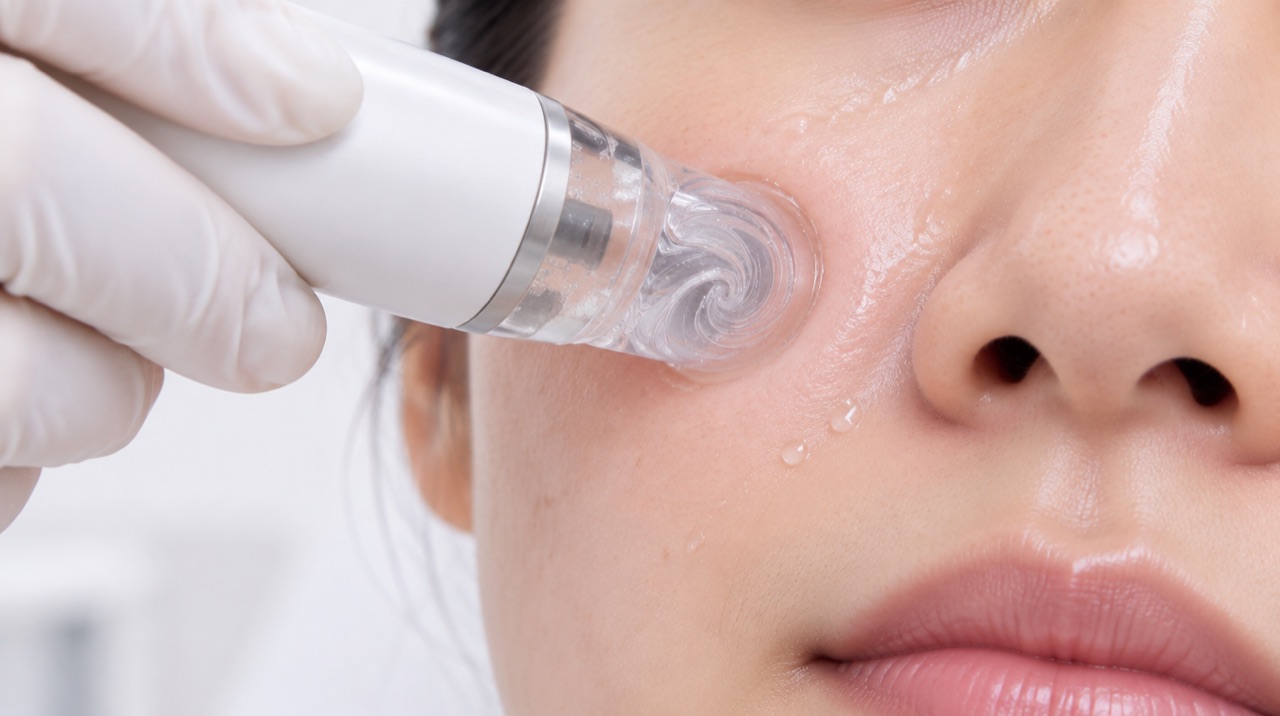
Aqua peel is the Korean name for hydradermabrasion, the same family of treatment as the branded HydraFacial. A handpiece with a spiral tip glides across the face, simultaneously flowing a solution onto the skin and vacuuming it away. The liquid softens what is in the pores and the suction lifts it out, so the skin is exfoliated and cleaned without scrubbing or squeezing.
Clinic menus use many names for it. Aqua peel is the most common; some clinics list it under the device or house name they use. If you are unsure whether a menu item is an aqua peel, ask whether it is a water-and-suction pore cleansing treatment.
The three steps of an aqua peel
- Exfoliate. A solution containing a mild AHA such as lactic or glycolic acid loosens dead surface cells.
- Extract. A BHA (salicylic acid) solution dissolves oil inside the pores while suction pulls out blackheads and sebum, especially around the nose and chin.
- Hydrate. A soothing, moisturising solution is infused to calm the skin and leave it plump.
The suction strength and solutions are adjusted for your skin. Many clinics follow the peel with manual extraction of stubborn comedones, a calming ultrasound treatment or a modelling mask.
What does an aqua peel do for the skin?
The immediate effects are cleaner pores, fewer visible blackheads, a smoother surface and a brighter, more hydrated look. It also helps skincare and any treatment that follows to absorb more evenly, which is why Korean clinics use it as the first step before lasers and boosters.
It is a good fit for congestion and mild acne, oily or combination skin and dullness. It is maintenance, not correction: it will not shrink pores permanently, remove acne scars or treat pigmentation. For those, see fractional laser and pico toning.
Aqua peel vs other Korean clinic peels
| Treatment | What it mainly does | Downtime |
|---|---|---|
| Aqua peel | Cleans pores with water, mild acids and suction | None |
| Lala Peel | Low-irritation acid peel for oil, texture and glow | None to minimal |
| Black peel | Stronger peel aimed at oily, acne-prone skin | Possible light flaking |
| Scaling | Light surface exfoliation and blackhead softening | None |
They are often combined: an aqua peel to clear the pores, followed by a peel that works on texture and brightness.
What a session is like
You lie down after cleansing, and the practitioner, usually an aesthetician or nurse, moves the tip across each area in slow passes. It feels like a cool, wet vacuum with a light pulling sensation; most people find it relaxing. The nose and chin get the most attention. The whole treatment takes around 15 to 30 minutes and you can see what was removed in the waste container afterwards.
Downtime, aftercare and how often
There is no real downtime. Sensitive skin may be pink for an hour or so, and occasionally a few spots surface over the next days as congestion clears. You can apply makeup the same day, although many people prefer to leave the skin bare until the next morning.
Use sunscreen, and avoid retinoids and exfoliating acids for a day or two. For ongoing congestion, clinics suggest repeating every two to four weeks. For visitors, it is an easy treatment to book on any day, including your last.
Who should be cautious
Aqua peels are gentle, but tell the clinic if you have very sensitive or reactive skin, rosacea, eczema, inflamed cystic acne, a sunburn, open wounds or cold sores, or if you have recently had a laser, strong peel or isotretinoin treatment. People with an aspirin or salicylate allergy should mention it because of the salicylic acid step. In these cases the clinic may lower the suction, change the solutions or suggest a calming treatment instead.
How to get the most from an aqua peel in Seoul
- Book it as the first step of a combined visit, before a booster or laser.
- Ask what follows the peel: extraction, soothing care, a mask.
- Ask who performs it and how suction is adjusted for sensitive areas.
- If you are short on time, it is a reliable no-downtime option before an event or flight.
Booking Aqua peel in Seoul as a visitor
Most Seoul skin clinics that treat international patients take Aqua peel bookings through an English web form or by WhatsApp, KakaoTalk or LINE. Send your concerns, a few clear photos and your travel dates, ask for a written quote that names the exact product or device and the amount, and bring your passport on the day. Leave a few days between treatment and your flight where you can, so the clinic can check you if anything needs attention.
Not sure whether Aqua peel is the right choice? Answer 12 quick questions for a personalised plan, compare skin clinics in Seoul, or read the complete guide to skin treatment in Korea.
Aqua peel in Korea: frequently asked questions
Is an aqua peel the same as a HydraFacial?
They are the same type of treatment: water-based exfoliation with suction and infused solutions. HydraFacial is one branded device, while aqua peel is the general name used in Korean clinics, where various devices are used.
Does an aqua peel hurt?
No. It feels like a cool, wet vacuum with light suction. Sensitive skin may turn slightly pink for a short time.
How often should I get an aqua peel?
For ongoing congestion clinics suggest every two to four weeks. It also works as a one-off refresh.
Can I get an aqua peel on the day I fly?
Yes. There is no downtime, so it is one of the easiest treatments to schedule on the last day of a trip.
Does an aqua peel shrink pores?
It clears what is inside the pores, which makes them look smaller for a while. It does not change pore size permanently; treatments such as RF microneedling or fractional laser target the pore structure.
This guide is general information for travellers, not medical advice. Product details and clinic practices change, and suitability, dose and settings are decided by a licensed doctor after examining your skin.